
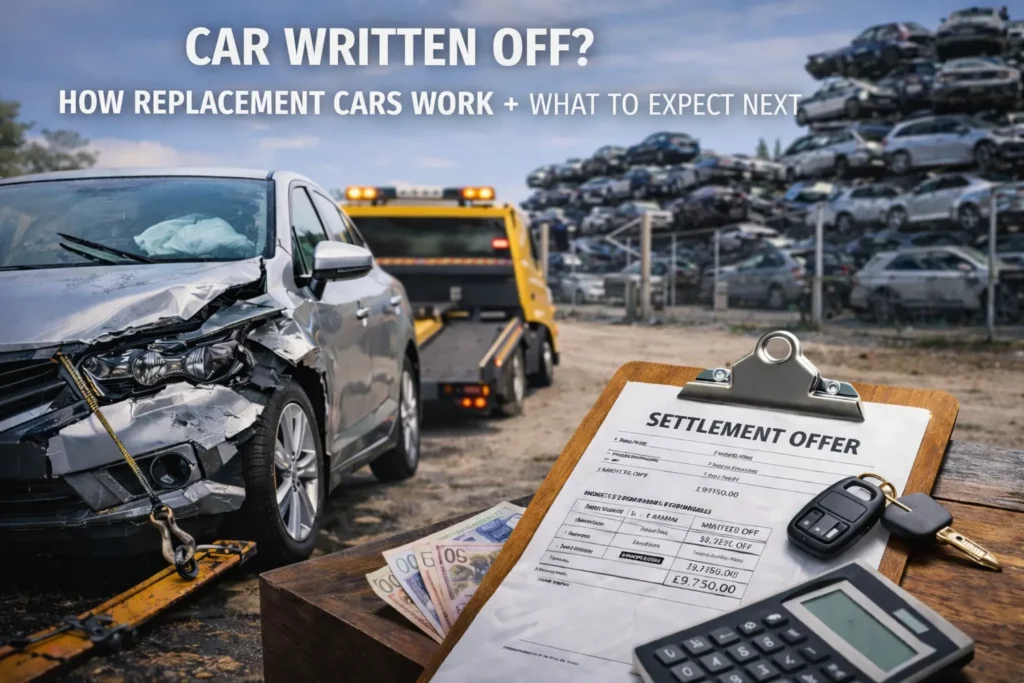
A car is written off when the repair costs exceed a specific percentage of the vehicle’s pre-accident value, typically 50% to 70%, or when the structural damage renders the vehicle unsafe for the road. Insurance companies classify these vehicles as a total loss.
Contents
What Does “Written Off” Mean in Practice?
“Written off” means your insurance provider classifies the vehicle as a total loss because the cost to repair it exceeds its market value or the safety threshold. You receive a cash settlement based on the car’s pre-accident value instead of a repaired vehicle.
Insurers utilize specific categories to define the severity of the damage. A total loss decision triggers the settlement process, where the insurer pays the market value of the car at the time of the incident. This financial compensation allows you to purchase a replacement vehicle. The threshold for a write-off depends on the “repair-to-value ratio,” which insurers set internally.
What Happens to Your Car After a Total Loss Decision?
After a total loss decision, the ownership of the vehicle transfers to the insurance company once you accept the settlement offer. The insurer then sells the vehicle to a salvage yard or a breaker for parts, depending on the assigned salvage category.
The insurance engineer assigns a category to the vehicle based on the Association of British Insurers (ABI) or local standards:
- Category A: The vehicle is scrap only and allows for no salvageable parts.
- Category B: The vehicle body is scrap, but parts are salvageable.
- Category S: The vehicle has structural damage but is repairable.
- Category N: The vehicle has non-structural damage and is repairable.
You surrender the vehicle keys and documents to the insurer. The insurer manages the disposal or resale of the salvage.
Replacement Car Timeline During Valuation and Payout
Entitlement to a replacement car typically ends 4 to 7 days after you receive the settlement check or once the insurer makes the total loss offer. Policy terms dictate the exact duration, as standard courtesy cars are intended for repairable vehicles, not total losses.
Insurers provide replacement vehicles under specific conditions:
- Courtesy Car: Provided by the repair network. These are often withdrawn immediately upon a total loss declaration.
- Hire Car: Included as an add-on to your policy. This provides coverage for a specific period, such as 14 or 21 days.
- Credit Hire: Available for non-fault accidents. You rent a similar vehicle and the at-fault party’s insurer covers the cost.
You review your policy documents to confirm the specific number of days allowed. Immediate action ensures you secure alternative transport before the insurer withdraws the vehicle.
What You Can Do to Avoid Delays
You accelerate the settlement process by providing all requested documents immediately and maintaining active communication with the claims handler. Prompt submission of the vehicle logbook (V5C), service history, and finance details prevents administrative bottlenecks.
To ensure a swift resolution:
- Submit the vehicle registration document and MOT certificate immediately.
- Locate the spare keys and service book for collection.
- Clear personal belongings from the vehicle before the salvage agent arrives.
- Provide settlement figures from your finance company if the car is on finance.
Active management of these steps reduces the “key-to-settlement” time. You retain copies of all correspondence to track the claim’s progress.
What Evidence Supports Your “Need” for a Hire Car?
To qualify for a credit hire vehicle, you demonstrate a “need” for a replacement car due to a lack of disposable income to rent one yourself (impecuniosity) and a requirement for daily transport. Courts and insurers require proof of this need to justify the hire costs.
In non-fault accidents, you validate the requirement for a comparable replacement vehicle through specific evidence:
- Daily Commute: Proof of employment and distance necessitates a vehicle.
- Family Obligations: School runs or care duties require a car.
- Financial Standing: Bank statements show insufficient funds to pay for a spot hire upfront.
You present these facts to the credit hire organization (CHO) to substantiate the claim. This evidence prevents the at-fault insurer from refusing the hire charges.
What to Do If the Settlement Offer Seems Low
You dispute a low settlement offer by presenting evidence of higher market value for comparable vehicles. Gather 3 to 5 advertisements for similar cars with matching age, mileage, and condition to prove the insurer’s valuation falls below the current replacement cost.
Insurers base offers on guide prices like Glass’s Guide or CAP. These guides sometimes lag behind current retail prices. You strengthen your negotiation position with specific data:
- Collect recent sales listings from major auto trader platforms.
- Highlight factory-fitted extras or recent major maintenance work (e.g., new tires, timing belt).
- Request the engineer’s report to check for factual errors in the vehicle’s description.
- Submit a formal written counter-offer with the supporting evidence attached.
You maintain the right to reject the first offer. The Financial Ombudsman Service acts as the final arbitrator if the internal complaint process fails to yield a fair result.
Can I keep the replacement car until payout?
Standard courtesy car agreements usually require the return of the vehicle once the insurer declares the car a total loss. However, credit hire agreements in non-fault cases often allow you to keep the vehicle until the settlement funds clear in your account.
What if I reject the insurer’s valuation?
Rejecting the valuation initiates a negotiation phase where you submit evidence of the vehicle’s higher market value. The insurer reviews the additional evidence and issues a revised final offer based on the verified data you provide.
Can I buy back my car (salvage)?
You retain the salvage by accepting a reduced settlement sum minus the vehicle’s scrap value. Insurers permit this for Category S and N write-offs, but Category A and B vehicles must be destroyed by law.
Does a write-off mean I was at fault?
A write-off classification relates solely to the repair cost versus the vehicle’s value and does not indicate fault. Liability is determined separately based on the accident circumstances and evidence provided by all parties involved.