
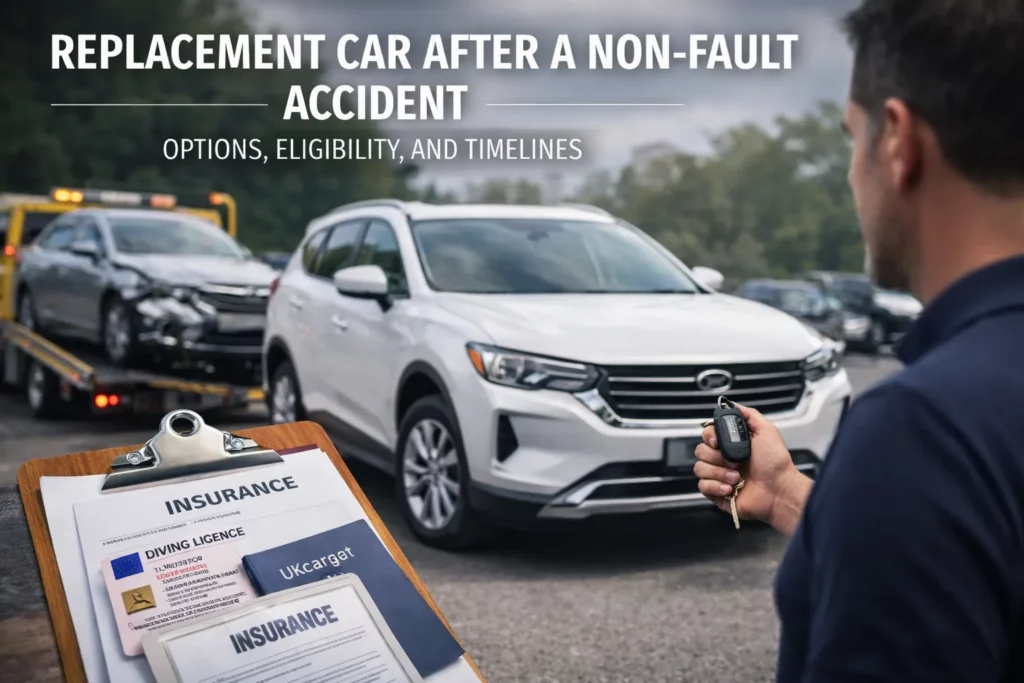
After an accident where you’re not at fault, there are three main options for a temporary vehicle: courtesy cars, credit hire vehicles, and accident management replacements. Courtesy cars are provided by repair shops during repairs. Credit hire vehicles offer a car while the insurer figures out liability. Accident management replacements ensure you get a vehicle similar to yours and handle all the claim details. To be eligible for a replacement car, you must show that you’re not at fault, provide third-party details, and have a valid driving license. A “like-for-like” car means you get a vehicle of the same size and class. The replacement car is yours until your vehicle is repaired or a settlement is reached. You’ll need to provide a few documents to get started. Credit hire can be risky if the insurer doesn’t pay up, and if liability is unclear, you may need to use your own insurance. Don’t worry you can still get a replacement even if you don’t have comprehensive insurance.
Contents
- What Are the 3 Types of Temporary Vehicles?
- Who Is Eligible for a Replacement Vehicle?
- What Does “Like-for-Like” Vehicle Mean?
- How Long Do You Keep the Replacement Car?
- What Documents Do You Provide?
- What Is Credit Hire and What Are the Risks?
- What Options Exist If Liability Is Disputed?
- Additional Questions About Replacement Cars
What Are the 3 Types of Temporary Vehicles?
The 3 primary options for temporary transport are courtesy cars, credit hire vehicles, and accident management replacements. Each option serves a specific purpose: courtesy cars keep you mobile during repairs, credit hire provides a vehicle before liability admission, and accident management replacements ensure a like-for-like vehicle is claimed from the at-fault party.
1. Courtesy Car
A courtesy car is a small, standard vehicle provided by the repair garage. Repair centers offer these vehicles subject to availability. You receive this car only while your vehicle undergoes active repairs.
2. Credit Hire Vehicle
Credit hire companies provide a vehicle to you on a credit basis. You sign a credit agreement (Consumer Credit Act agreement), and the hire company recovers the daily hire rate from the at-fault driver’s insurer. This option carries financial risk if the insurer refuses to pay the full rate.
3. Accident Management Replacement
Accident management companies handle the entire claim process. They provide a like-for-like replacement vehicle and recover the costs directly from the third-party insurer. This option protects your no-claims bonus and avoids excess payments on your own policy.
Who Is Eligible for a Replacement Vehicle?
Eligibility for a replacement vehicle requires 3 confirmed conditions: you are not at fault for the accident, there is an identifiable third party, and you hold a valid driving license. Meeting these criteria allows an accident management company to process your request immediately.
Specific eligibility requirements include:
- Non-Fault Status: The accident circumstances must clearly show the other driver is liable.
- Identifiable Third Party: You must provide the registration number and insurance details of the at-fault vehicle.
- Valid Documentation: You must hold a full driving license and meet the age requirements of the hire provider.
- Need for a Vehicle: You must demonstrate a requirement for a replacement vehicle (e.g., commuting, school runs).
What Does “Like-for-Like” Vehicle Mean?
“Like-for-like” means you receive a replacement vehicle of the same size, class, and specification as your damaged car. This ensures you maintain your standard of daily living without compromise during the claim period.
For example, if you drive a 7-seat SUV, you receive a 7-seat SUV. If you drive a prestige saloon, you receive a prestige saloon. This differs from a standard courtesy car, which is often a small hatchback regardless of your own vehicle’s class.
How Long Do You Keep the Replacement Car?
You keep the replacement car for the entire duration of the repair process or until 7 days after you receive a settlement check for a total loss. The specific timeline depends on the condition of your vehicle.
- Repairable Vehicles: You keep the car until your own vehicle is fully repaired and returned to you.
- Total Loss (Write-Off): You keep the car until the settlement payment clears, plus an additional grace period (usually 7 days) to allow you to purchase a new vehicle.
What Documents Do You Provide?
You must provide 4 specific documents to secure a replacement vehicle: your driving license, proof of address, insurance certificate, and the accident details. Submitting these documents promptly prevents delays in vehicle delivery.
Prepare the following items:
- Provide a valid photo ID (Driving License or Passport).
- Submit a recent utility bill (Proof of Address dated within 3 months).
- Supply your current insurance schedule.
- Present the third-party details (Name, Registration, Insurance).
What Is Credit Hire and What Are the Risks?
Credit hire is a funding mechanism where a replacement vehicle is provided now and paid for later by the at-fault insurer. You enter a contract stating that if the third party fails to pay, the liability for the hire costs technically falls to you.
The main risk involves “impecuniosity.” Courts may limit the recoverable hire rate if you could have afforded to hire a car yourself at a standard spot rate. Always declare your financial situation honestly to the credit hire organization (CHO) to mitigate this risk. A reputable CHO offers an insurance policy to cover these costs if the claim fails.
What Options Exist If Liability Is Disputed?
If liability is disputed, you must use your own comprehensive insurance policy or hire a car at your own expense initially. Accident management companies generally require clear liability to authorize a credit hire vehicle.
Your options include:
- Claim on your policy: Pay your excess and use the insurer’s standard courtesy car.
- Wait for evidence: Gather dashcam footage or witness statements to prove non-fault status.
- Split liability: Accept a percentage of fault, which may disqualify you from a cost-free like-for-like replacement.
Additional Questions About Replacement Cars
Timing and Insurance Queries
Can I Get a Replacement Car the Same Day?
Yes, many accident management companies deliver a replacement car within 24 hours of claim acceptance. Immediate delivery depends on vehicle availability and the speed at which you provide the necessary documentation.
What If I Don’t Have Comprehensive Insurance?
You remain eligible for a non-fault replacement car even with third-party only (TPO) insurance. The claim processes against the at-fault driver’s insurance, so your own policy coverage level does not restrict your access to a replacement vehicle.
Do I Pay Excess?
No, you do not pay any policy excess when using a non-fault accident management service. Because you claim directly from the at-fault party’s insurance, your own policy excess is not applicable to the replacement vehicle or the repair.
What If I’m Partly at Fault?
If you are partly at fault (split liability), you are generally not eligible for a credit hire replacement vehicle. You must rely on your own insurance policy’s courtesy car provision, as the third-party insurer will only cover a percentage of the costs.