
Car Written Off? How Replacement Cars Work + What To Expect Next
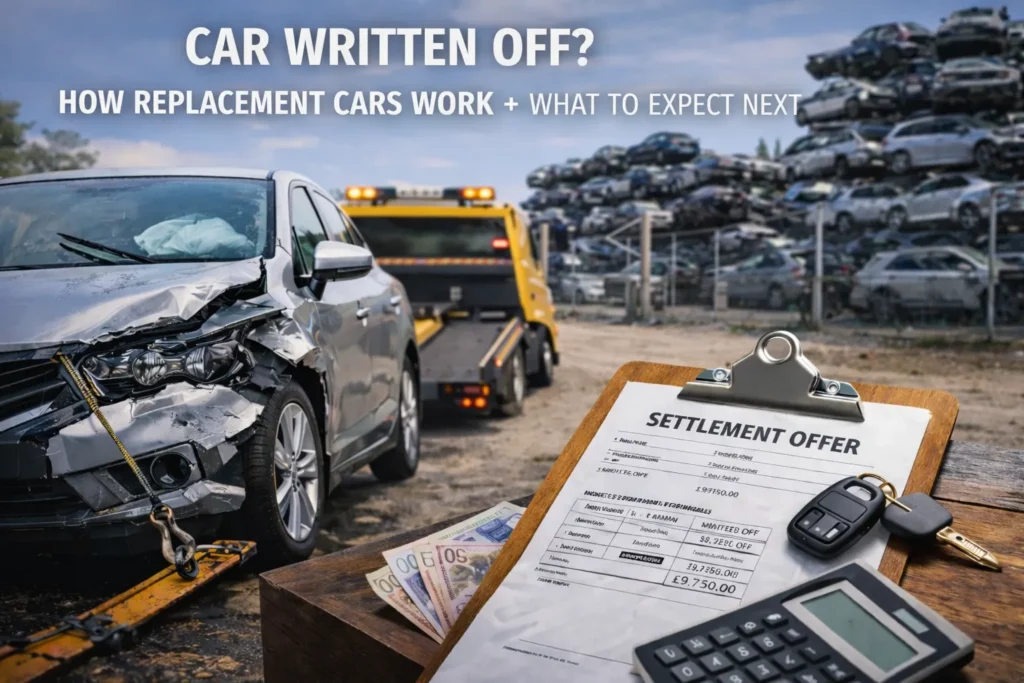
A car is written off when the repair costs exceed a specific percentage of the vehicle’s pre-accident value, typically 50% to 70%, or when the structural damage renders the vehicle unsafe for the road. Insurance companies classify these vehicles as a total loss. What Does “Written Off” Mean in Practice? “Written off” means your insurance […]
Courtesy Car vs Hire Car vs Replacement Car: What’s the Difference?
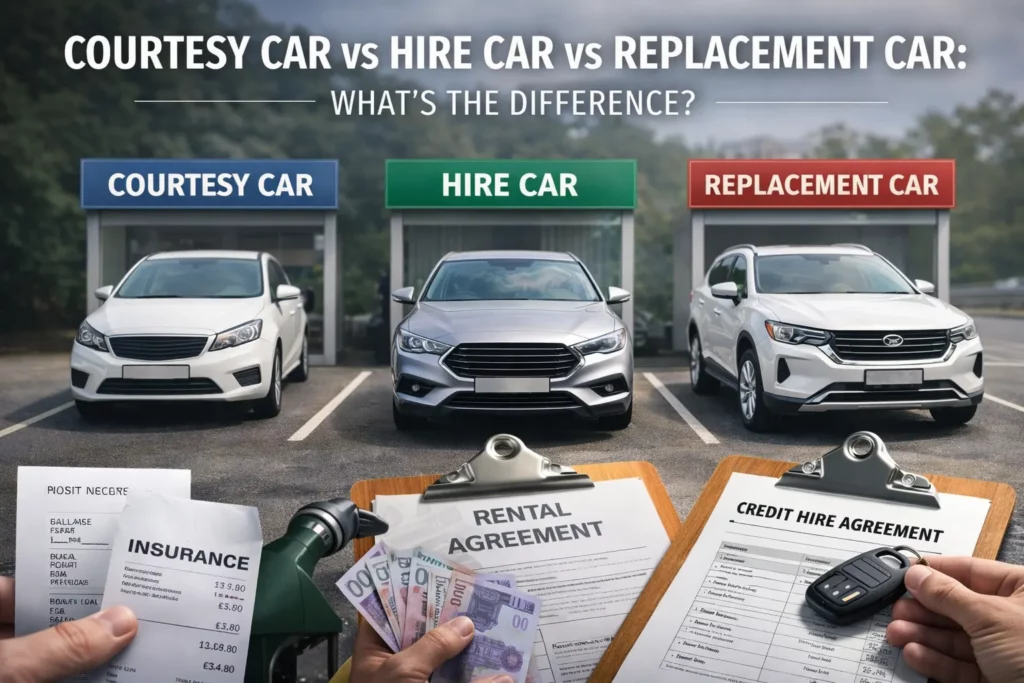
Courtesy, hire, and replacement cars differ in cost, vehicle type, and who covers the expenses. A courtesy car is a small vehicle provided by a repair shop during repairs, often with restrictions and no extra features. A hire car is a rental you pay for directly, offering more choice and flexibility. A replacement car, provided […]
Replacement Car After a Non-Fault Accident: Options, Eligibility, and Timelines

After an accident where you’re not at fault, there are three main options for a temporary vehicle: courtesy cars, credit hire vehicles, and accident management replacements. Courtesy cars are provided by repair shops during repairs. Credit hire vehicles offer a car while the insurer figures out liability. Accident management replacements ensure you get a vehicle […]
Who Pays Recovery and Storage Fees After an Accident? (Non-Fault vs Fault)
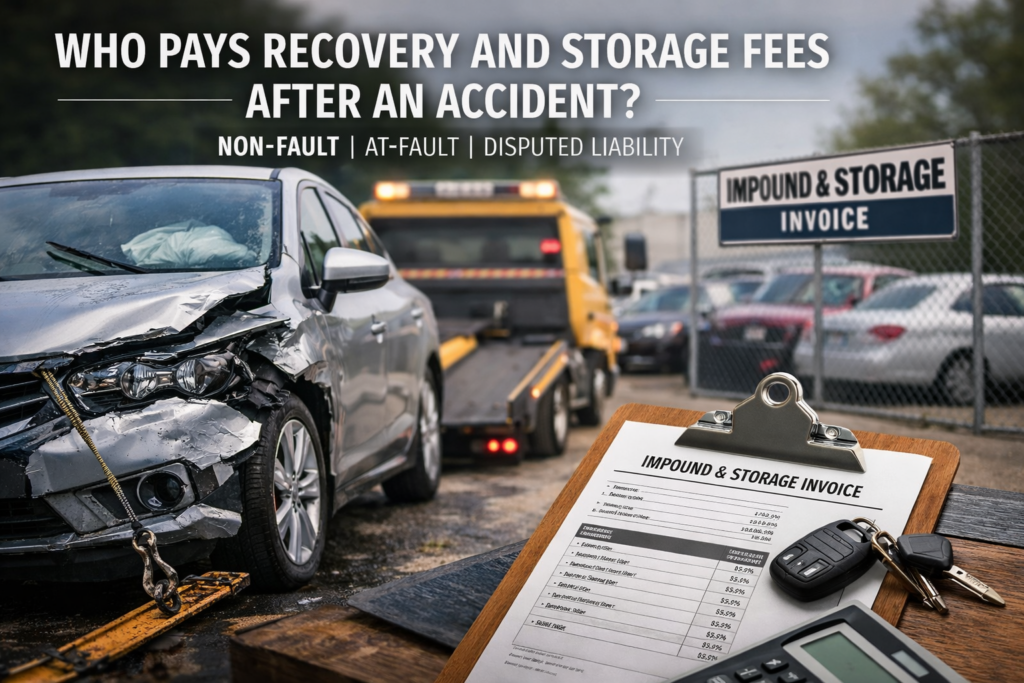
Recovery (towing) and storage charges attach to who pays the property-damage claim and what your policy covers. In fault-based insurance systems, the at-fault driver’s insurer generally handles reasonable towing and storage fees once liability is accepted, while at-fault drivers often rely on their own coverage or pay directly. Who pays recovery and storage fees in […]