
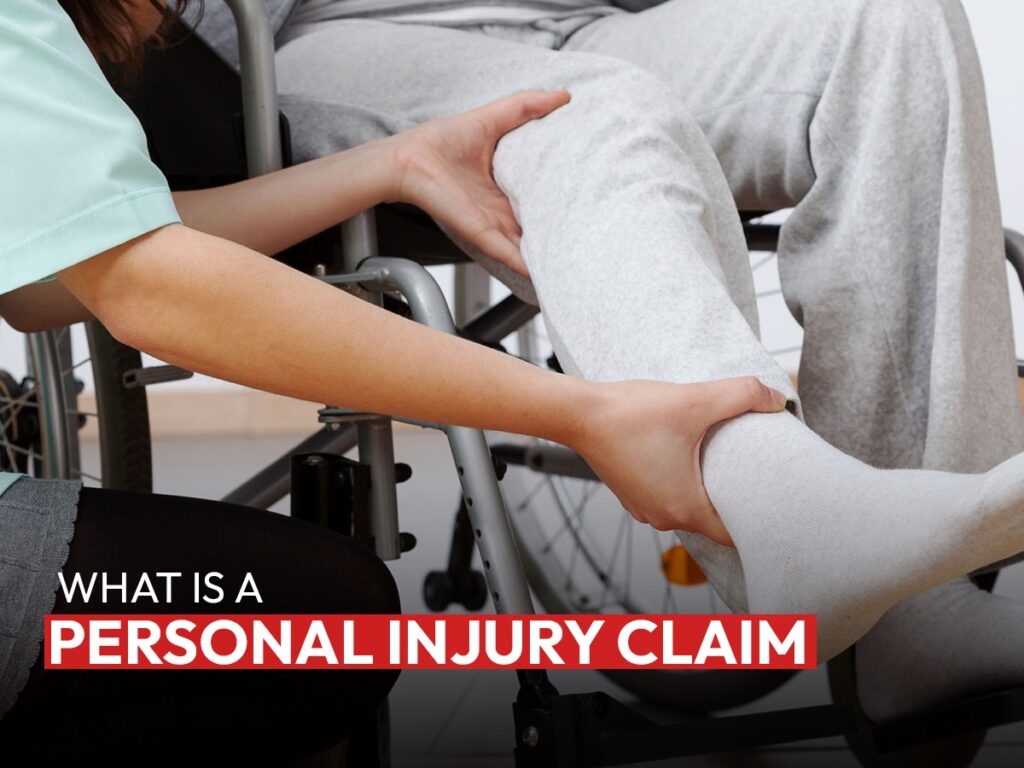
Every year, a great number of people are getting injured here in the UK due to accidents that are not their fault. Sometimes it’s a road traffic accident, a slip and fall in public places, or sometimes it happens due to medical negligence or an accident at the workplace.
Whatever the case may be, if someone else’s negligence causes you harm, it is your right to get compensation. But how can you do that, right? That’s where personal injury claims come.
So, what is a personal injury claim? Let’s explore this comprehensive guide to know what it is, how it works, the types of injuries you can claim for, how to initiate the process in the UK, and what factors you should consider to get fair compensation.
Contents
- What Is a Personal Injury Claim? A Complete Guide for UK Claimants
- What Is a Personal Injury Claim?
- Why We Should Make a Personal Injury Claim
- What Are the Types of Personal Injury Claims in the UK?
- What Does Personal Injury Law Come Under?
- What Type of Compensation Do Personal Injury Claims Include?
- How Is Personal Injury Compensation Calculated?
- What Is the Average Payout for a Personal Accident Claim in the UK?
- How to Make a Personal Injury Claim?
- Can You Make a Personal Injury Claim Yourself?
- Final Thought
What Is a Personal Injury Claim? A Complete Guide for UK Claimants
Firstly, we need to be clear about what a personal accident claim is.
What Is a Personal Injury Claim?
When you get hurt physically or psychologically or suffer injuries due to the negligence or purposeful act of another party, it is legal to file a claim against them to get compensation. So, a personal injury protection claim is the process of asking for compensation to cover medical expenses, out-of-pocket costs, pain and suffering, lost remuneration, and any other damages caused by the event.
Now, let’s learn about the importance of making claims for personal injury.
Why We Should Make a Personal Injury Claim
Pursuing a personal accident claim will allow you to get fair compensation that can help you overcome some of the burdens related to your injuries. Let’s be more specific.
Cover Medical Expenses
If you need expensive medication or medical treatments such as surgery, rehabilitation therapy, or ongoing care to treat your injuries or dreadful psychological conditions, you can cover these expenses and ensure your physical and emotional safety with the money you receive as compensation.
Recover Financial Losses
In the worst scenario, if someone loses the capacity to earn a living or can’t work temporarily or permanently, a successful claim for personal injury can help recover these lost wages and offer financial stability during the recovery stage.
Bring Justice to The Victim
Except for financial compensation, personal accident claims also help to ensure justice for the victim who suffered physical, psychological, or financial difficulties due to others’ wrongdoing.
Hold Negligent Parties Accountable
By pursuing legal action, you can hold the person accountable for your personal injuries. This incident will teach the at-fault party to be careful of such dangerous practices or negligence.
Prevent Similar Incidents from Happening to Others
When you pursue a personal injury protection claim against the at-fault parties, it will deliver a message to them that they can’t get away with committing such a crime. As a result, it prevents the repetition of similar incidents and promotes a safer environment for others.
As a personal injury claim might arise in many scenarios, we should have proper knowledge about that to decide which claim we need to pursue.
What Are the Types of Personal Injury Claims in the UK?
Here we are presenting the most common types:
Road Traffic Accident Personal Injury Claims (covered by motor insurance)
This includes car accidents, motorcycle accidents, cycling accidents, and pedestrian injuries. Whether it’s a minor bump or a major collision, you can go for road traffic accident compensation claims if it was not your fault. The payout will support your medical expenses, pain and suffering, lost wages, and other damages.
Workplace Accident Claims (covered by employers’ liability insurance)
It is a legal duty of the employers to provide a safe working environment. This type of claim may include slips, trips, and falls in an office setting, construction site accidents, injuries from faulty machinery, exposure to toxic substances, or repetitive strain injuries (RSI).
Medical Negligence Claims
When a medical professional provides substandard care, it may worsen the condition or result in injury. You can mark this scenario as medical or clinical negligence. It can have devastating consequences both for the patients and their families. If you are the victim of any clinical negligence, hurry up and claim your compensation.
Slips, Trips, and Falls in Public Areas or Business Premises (covered by public liability insurance)
Wet floors, poor lighting, uneven surfaces, poorly maintained walkways, spills, falling objects, or unsafe premises in shops, restaurants, or any business area can lead to injuries. Property owners must keep up a safe environment for visitors. Therefore, if you suffer this type of injury due to the carelessness of property owners, you may pursue a valid compensation claim.
Product Liability Claims (covered by product liability insurance)
When you get injured because of a defective or unsafe product, you can file a claim against the manufacturer or retailer.
Asbestos Disease Claims
Suppose anyone gets exposed to asbestos and suffers from a significant asbestos disease, such as asbestos lung cancer, mesothelioma, asbestosis, or pleural thickening. In that case, they can go for personal injury compensation claims.
This time, we will learn how personal accident claims are handled here.
What Does Personal Injury Law Come Under?
Though in the UK, you will not find a single law formally titled as “Personal Injuries Proceedings Act” like in Australia (e.g., in Queensland), personal injury claims and proceedings in the UK are conducted by a combination of statutory laws, common law principles, and civil procedure rules.
Therefore, personal injury claims are usually dealt with under civil law and are governed by the Limitation Act 1980, which sets a time limit for bringing a claim.
The usual time limit to make a personal injury claim is within three years from the date of the accident or from the date you became aware of the injury. You may call it the date of knowledge as well.
However, this time limit may vary depending on the age, situation, and condition of the victims.
For children, the standard time limit starts from their 18th birthday.
There is no time limit for mentally incapable persons.
If it is a fatal claim, the family will get three years from the date of death.
What Type of Compensation Do Personal Injury Claims Include?
Well, if the claim is successful, you will be awarded compensation. In the correct legal term, this compensation is called ‘damages.’ The damages you may receive can be of two types.
General Damages
When the compensation for your injury claim can’t be calculated solely by using a mathematical formula, you may describe it as general damages, which includes pain, suffering, and loss of amenity (PSLA). That means you will get damages for the injury pain, the suffering it causes, and its effect on your daily life.
Special Damages
Special damages cover financial harms such as loss of earnings, medical bills, travel expenses, home adaptations or mobility aids, and car repair or replacement.
For example, suppose you have to take time off work to recover from the injury. In this case, you may pursue a loss of earnings claim against the at-fault party.
So, you can see that these losses can be calculated by using a mathematical calculation.
How Is Personal Injury Compensation Calculated?
When you make a claim for a personal injury in the UK, the amount of compensation depends on several factors, such as
Severity of your injury
Whether the injury will affect your earnings at present or in the future
Impact of the injury on your family life, leisure time, and the quality of your life
Medical and rehabilitation costs
Psychological trauma
Courts and insurers use the Judicial College Guidelines (JCG) to determine a fair amount for general damage. These guidelines offer a range of compensation for each type of injury. So, you need to follow these guidelines while calculating your compensation as well.
And if your compensation falls under the special damages category, we suggest using online compensation calculators, online claim calculators, or spreadsheets to estimate these amounts.
However, I need to inform you that these calculators can only give a rough estimate. Therefore, if you want a more accurate picture, it’s best to consult a solicitor.
Now, what would the scenario be if your personal injury claim goes to court? Don’t worry, as the possibility is too low, estimated at not more than 5%, whereas some legal commentators claim the figure to be as low as 1%.
And if, unfortunately, you are within that 5% or 1%, a real judge sitting in the court will explore the evidence presented by both the claimant and the defendant and decide a fair amount based on
Judicial Precedent: The amount already awarded to claimants of similar cases.
Judicial College Guidelines: Every few years, these guidelines include new rules for personal injury claims, and the updated version is published as a book.
What Is the Average Payout for a Personal Accident Claim in the UK?
Though there is no such thing as an average payout in a personal injury claim, here we are presenting the typical compensation ranges based on the 17th edition of the Judicial College Guidelines, which was published in April 2024.
| Injury Type | Latest Range (17th Edition, Apr 2024) |
| Minor whiplash | Tariff-based up to 2 years (fixed), +20% in exceptional cases |
| Moderate whiplash | Tariff-based—same regime as minor |
| Minor soft tissue injury | £1,680–£2,990 |
| Broken arm | £4,350–£12,600 |
| Fractured leg (less severe) | ≈ £2,990+ (moderate soft tissue/leg injury range) |
| Moderate back injury | £15,260–£47,320 |
| Head and brain injuries (minor to severe) | £1,880–£344,640 |
| Loss of limb (leg amputation, depending on above or below knee) | £100,000–£400,000 |
| General psychiatric damage (less severe to severe) | £1,310–£98,750 |
| PTSD (less severe to severe) | £3,370 – £85,880 |
Here we are also adding an average payout based on claim type:
| Claim Type | Typical Total Payout |
| Minor road traffic accident | £1,000 – £4,000 |
| Slip/trip (minor injury) | £2,000 – £6,000 |
| Workplace injury (moderate) | £5,000 – £30,000 |
| Serious injury/trauma | £50,000 – £500,000+ |
| Fatal injury (dependents) | £12,000 – £300,000+ |
According to Accident Claims Advice, the total calculation includes both general and special damages, based on actual receipts.
Now that you know about the payout and how it should be calculated, let’s prepare to start the claim.
How to Make a Personal Injury Claim?
You need to follow the steps below to initiate your personal injury claim.
Seek Medical Attention
Be sure to prioritise your health and seek clinical treatment immediately after the accident.
Gather Evidence
Your medical report will form the foundation of your claim. So, collect the medical records and GP/hospital reports, along with photographic evidence of injuries and the accident scene, witness statements, receipts for travel or other expenses, and a pay slip as proof of loss of earnings.
Report the Accident
Then, you should report the incident to relevant parties, such as the police, your employer, or the council.
Contact a Solicitor or Claims Management Company
Though you can handle a personal injury claim yourself, getting professional help will improve your chances of success, as they have vast knowledge and understanding of personal injury laws.
You can also rely on Rapid Claim Solutions. We offer personal injury support, guiding you through the entire claims process and recovering fair compensation by claiming damages from the at-fault party’s insurer.
Submit the Claim
After that, your solicitor will inform the defendant and their insurer of your intention to claim. This is known as the Letter of Claim.
Negotiate or Go to Court
If the at-fault party admits liability, your solicitor will negotiate a settlement, and in case they deny their responsibility, the case may go to court.
However, if you don’t want a solicitor, go through the next part.
Can You Make a Personal Injury Claim Yourself?
Yes, of course. You can make a personal injury claim yourself without a solicitor, especially if you have a minor injury or whiplash and a simple or low-value claim under £5,000. You can do this using the Official Injury Claim (OIC) Portal. In that case, first, know the essential rules and procedures, and then go ahead.
However, we suggest you get a solicitor if you have a high-value or complex claim. Make sure to go for a No Win, No Fee agreement in this situation. This special deal means that if you lose, you pay nothing, and if you win, your solicitor will take his success fee, which is usually 25% of your compensation. So, there are no upfront legal fees here.
Sounds great! Right?
Final Thought
So, what is a personal injury claim? You already know all the ins and outs of it by this time. Therefore, don’t suffer in silence, know your rights, gather your evidence, and take that first step towards financial recovery and accountability.